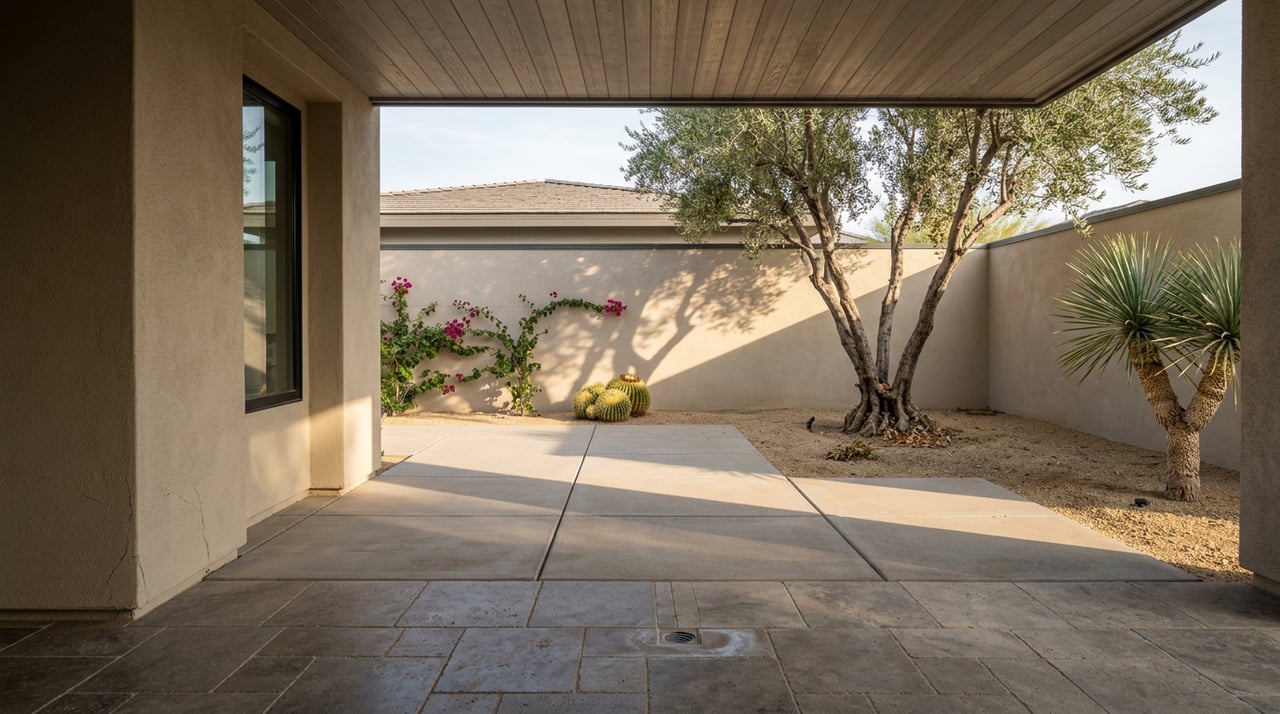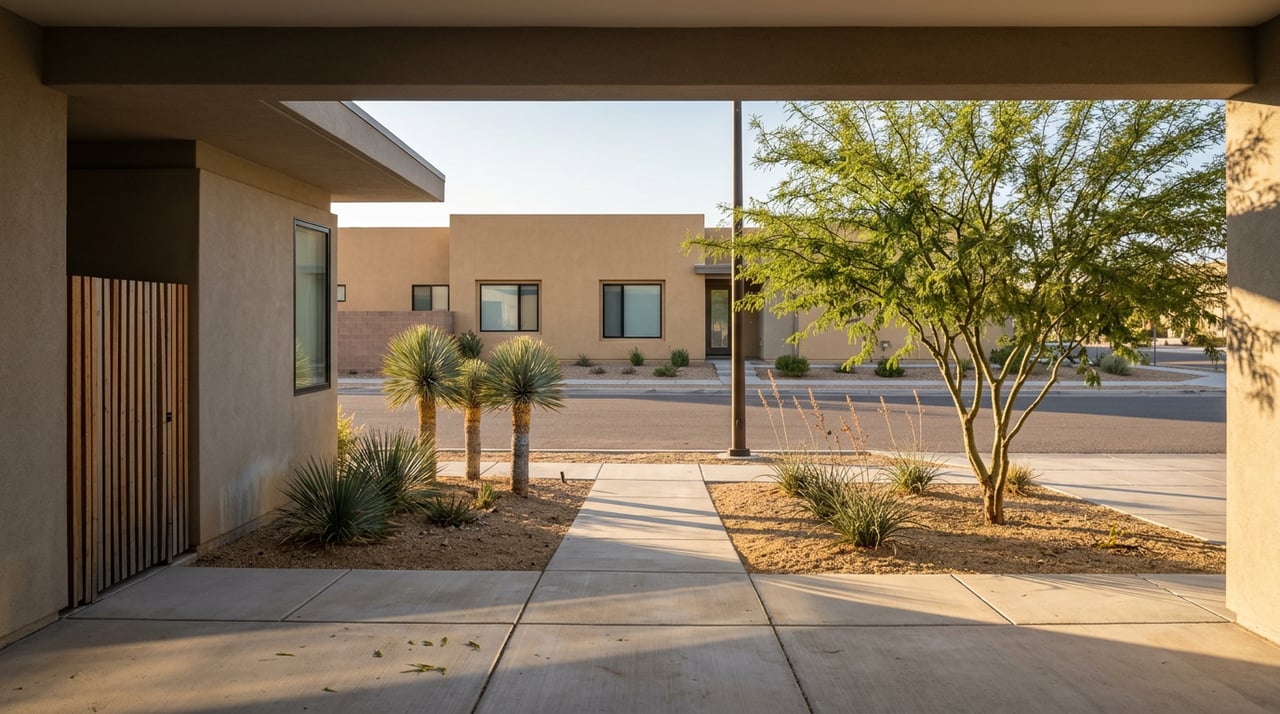
Two buyers are comparing homes in the same section of Mountains Edge. Same square footage, same builder, same HOA dues, priced within a few thousand dollars of each other. Then the annual tax estimate comes back and one is running several hundred dollars higher than the other, with nothing in the listing, the HOA disclosure, or the seller's net sheet explaining why.
The gap isn't a tax at all. It's a bond.
Nearly every master-planned community in Enterprise, from Rhodes Ranch to Mountains Edge to Southern Highlands, was carved out of raw desert using a financing tool called a Special Improvement District, or SID (Local Improvement Districts, LIDs, work the same way for smaller projects). Someone had to pay for the streets, curbs, sewer lines, and water systems before the first house could go up, and instead of raising taxes valley-wide, Clark County issued bonds against the specific parcels that benefited, then billed the homeowners inside that footprint until the bond is retired. That bill rides along separately from the ad valorem property tax, and it does not track your home's value. It tracks which phase of the community you happen to own in.
What This Line Item Actually Is
Special Improvement Districts are authorized under Nevada's Consolidated Local Improvement Law. Clark County's own explainer describes the projects plainly: street pavement, curb and gutter, sidewalks, streetlights, sewer and water facilities, the infrastructure a developer needs in place before lots can be sold. The county sells bonds to cover the cost, then apportions repayment across the benefiting parcels on a front-foot, area, or zone basis, whichever method fits the project.
The assessment is not folded into your regular tax bill. It is billed separately, typically twice a year, and it functions as a lien against the property until the bond is paid off. Because the payments are servicing actual bond debt rather than general revenue, the county treats delinquency seriously: after 60 days without payment, foreclosure proceedings can begin. This is not the kind of fee you can quietly let lapse the way you might a subscription.
Every Big Enterprise Community Was Built This Way
Rhodes Ranch broke ground in 1997 and grew into a 1,350-acre guard-gated community built around a Ted Robinson-designed golf course, eventually surpassing 4,000 homes across several recognizable sections. Mountains Edge followed as a roughly 3,000-acre master plan organized around Exploration Peak Park and a network of paseos connecting more than a dozen villages, built without a security gate. Southern Highlands became the area's premier golf address, anchored by a Jack Nicklaus Signature course, with some enclaves guard-gated and others open to public streets.
All three started more than two decades ago, part of the same growth wave that followed construction of the 215 Beltway, according to reporting in the Las Vegas Review-Journal. All three needed the same basic infrastructure laid down phase by phase as the developer released new sections. That means the bond assessments underneath them were also issued phase by phase, not all at once, which is the reason identical-looking homes can carry different numbers today.
| Community | Gate Status | Signature Amenity | What It Means for a SID Check |
|---|---|---|---|
| Rhodes Ranch | Guard-gated, 24/7 | Golf course (Ted Robinson design) | Development began in 1997, so some of the earliest bonded phases are well along toward payoff while newer sections are not |
| Mountains Edge | Not gated | Exploration Peak Park and connecting paseo trails | Built out across roughly 3,000 acres over two decades, so the parcel's specific phase matters more than the neighborhood name |
| Southern Highlands | Mix of guard-gated and open sections | Golf course (Jack Nicklaus Signature design) | Guard-gated enclaves can carry both an HOA premium and an active bond line, so verify by the specific enclave, not the community as a whole |
Why Your Neighbor's Bill Doesn't Match Yours
A bond issued to build the streets in an early-released phase of Mountains Edge is on a different repayment clock than a bond issued for a phase released years later, two streets over. The assessment on the older phase might already be in its final years, meaning it disappears from the tax bill entirely once retired, permanently, with no renewal. The assessment on the newer phase could still have a decade or more left. Neither homeowner's HOA dues change because of this. Neither one shows up differently in the listing description. The only way to see it is to look at the actual county tax record for that specific parcel.
This is also why a seller pointing to a low property tax bill as a selling point deserves a second look, and why a buyer comparing two homes on paper should not assume the numbers are apples to apples just because the price and square footage match. One house might be carrying an assessment with six years left. The other might have paid its share off already.
Checking Before You Write An Offer
The good news is that verifying this takes one lookup, not a negotiation. Before removing contingencies on a home in any of Enterprise's master plans, it is worth confirming:
- Whether the parcel shows an active special assessment separate from the ad valorem tax line, using the property's Assessor's Parcel Number through the Clark County Treasurer's special assessment records
- The remaining balance and payoff figure, since many districts allow a lump-sum prepayment at closing rather than carrying the annual charge forward, available through the Treasurer's special assessment payment options
- Whether escrow and title have flagged the assessment as a recorded lien in the preliminary title report, since it should appear there independent of any HOA documentation
None of this shows up automatically in an MLS sheet, and HOA resale packages are built to disclose association matters, not county bond debt. The two systems run on parallel tracks.
One Office Handles It, Because Enterprise Never Became a City
Here is the part that actually simplifies things once you know it. Enterprise has never incorporated. Clark County Commission created it as an unincorporated town in December 1996, with a Town Advisory Board providing local input on zoning and development, and policing handled through the Metropolitan Police Department's Enterprise Area Command rather than a city force. Because there is no City of Enterprise government, there is no separate municipal finance department competing with the county for jurisdiction over these assessments. Every SID and LID inside Rhodes Ranch, Mountains Edge, and Southern Highlands runs through the same Clark County Treasurer's office, full stop.
That single point of contact is not automatic knowledge for every buyer, though, especially anyone relocating from a market where the city itself administers bond districts. In 2023 reporting from the Las Vegas Review-Journal, county figures showed Enterprise would rank as the fourth-largest city in the county behind Las Vegas, Henderson, and North Las Vegas if it ever incorporated, and a Clark County commissioner quoted in that coverage said the startup cost of standing up an entirely new government made incorporation unlikely any time soon. Nothing about that structure has changed since: the county remains the only office you need, which is one less variable in an already layered transaction.
A Few Questions Worth Answering Early
Does the SID assessment show up in the HOA resale disclosure package? No. The HOA package covers association dues, reserves, and rules. The bond assessment is a county-administered lien and needs to be checked separately through the Treasurer's parcel record.
Can I pay off the remaining balance instead of inheriting the annual charge? Often, yes. Many districts allow a lump-sum prepayment, and the payoff figure can be requested through the county before closing.
Will the assessment ever just go away? Yes, permanently, once the underlying bond is retired. At that point the home moves to an ad valorem-only tax bill and the line item disappears for good, which is worth factoring into how you compare a home's long-term carrying cost against a similar one nearby.
Buying in Enterprise means buying into one of these master plans, and the bond attached to your specific parcel is as much a part of the deal as the HOA dues or the school boundary. It is a five-minute lookup that can change how two "identical" homes actually compare.
If you are weighing a purchase in Rhodes Ranch, Mountains Edge, Southern Highlands, or anywhere else in the southwest valley, Shaun Marion can help you pull the parcel-specific numbers before you write an offer. Get your instant home valuation to start the conversation.