Up in MacDonald Highlands, off Stephanie Street south of Horizon Ridge Parkway, crews are building two towers of 24 and 25 stories into the side of the McCullough Range. The Las Vegas Review-Journal reported on Nov. 11 that buyers had signed contracts for 148 of the 171 units in the Four Seasons Private Residences Las Vegas, totaling $963 million. Prices run from $5.2 million to $35.7 million, and completion is expected in fall 2027.
That project has little in common with the condo a first-time buyer or small investor is pricing this winter. The local agents quoted in that article describe a high-rise market that has lost many of its investor buyers, and the Las Vegas REALTORS numbers for condos and townhomes moved the same way over the last two years.
Two years, one inventory problem, two different outcomes
Start in October 2024. That month, Las Vegas REALTORS reported a median existing single-family price of $475,531 and a record condo and townhome median of $315,000. At month's end, 5,784 single-family homes and 1,799 condos and townhomes were listed without offers, and the valley had just over three months of supply. In that same October 2024 report, 80.0% of condos and townhomes sold within 60 days.
Now jump to the October 2026 report, released Nov. 6. The single-family median for October 2026 was $475,000, up 0.1% from a year earlier and below the all-time high of $490,000 set in May and June. The condo and townhome median for the same month was $279,000. At the end of October 2026, 8,112 single-family homes and 2,837 condos and townhomes were listed without offers, and the sales pace worked out to nearly six months of supply.
Both property types picked up a lot of unsold inventory over those two years. Houses gained about 40% more listings without offers and condos about 58%. The two prices went separate ways. The median house in October 2026 cost almost exactly what it did in October 2024. The median condo or townhome cost about $36,000 less, a drop of roughly 11%. In October 2024 the median house cost about $160,000 more than the median condo or townhome. By October 2026 the difference was about $196,000.
Speed changed too. In October 2026, 72.4% of existing homes sold within 60 days, compared with 62.5% of condos and townhomes. Sales volume shows the same split. October 2026 sales were down 11.9% from a year earlier for homes and down 23.6% for condos and townhomes. The month before was similar. In September 2026 condo and townhome sales were down 12.6% year over year, and 2,796 condos and townhomes sat without offers.
LVR President George Kypreos blamed the October slowdown on the recent rise in mortgage rates. Higher rates hit both property types, though. Something else is needed to explain why condos absorbed the slowdown in price and houses absorbed it mostly in time.
Condos depend on a buyer that houses never needed
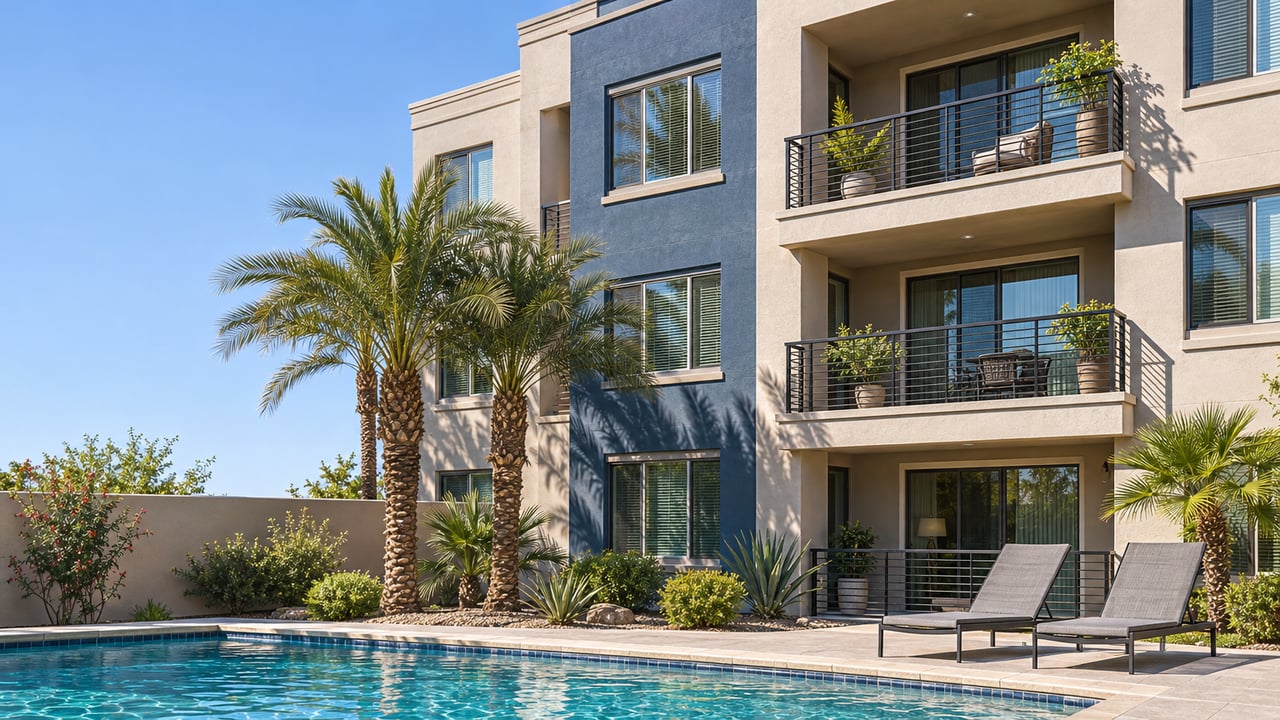
The Review-Journal piece describes who buys Las Vegas condos. Most local homebuyers want a single-family house, and the buyer pool for residential towers has long been made up mostly of investors who rent the units out and wealthy buyers who use them as vacation homes or part-time residences. The article is about towers. LVR's condo and townhome figures cover far more than towers, but any unit whose likely buyer is a landlord faces the same math.
A house has many possible buyers. Families, relocators and first-time buyers all bid on it, and none of them need the purchase to pay for itself. A condo that relies on landlords has a buyer who does need it to pay, every month. When that math stops working, that buyer stops bidding, and the price has to fall far enough to attract someone else.
The agents the Review-Journal interviewed say that is happening in the towers. Randy Char said investors have less appetite because HOA dues, building maintenance and other costs keep rising while landlords can't charge enough more in rent to keep up. Jay Lean said new upscale apartment buildings are making it harder for condo owners to find tenants, and that insurance, HOA dues and other costs are all going up. Mahsheed Parsons put it more bluntly to the paper: "It's not really the best investment for a lot of people."
The high-rise numbers show how far it has gone. According to Las Vegas REALTORS figures cited in the article, buyers purchased almost 600 high-rise condo units in 2025, down from 1,315 in 2021.
The rent side of the math has gone flat
You can check the landlords' complaint against rent data, and it holds up. The Las Vegas Sun reported in July that average asking rent across Southern Nevada multifamily was about $1,465 in the first quarter of 2026, compared with $1,461 a year earlier. Avison Young's third-quarter 2026 survey of buildings with at least 50 units put average rent at $1,450, down 0.4% from a year earlier. Colliers measured effective rent growth for the second quarter of 2026 at negative 2.7%.
Apartment supply keeps growing. Avison Young counted 4,077 units under construction in the third quarter of 2026, including 2,075 in Enterprise and South Paradise and 1,674 in Summerlin and Spring Valley. Downtown, the Review-Journal reported in May that Southern Land had started preleasing two new buildings this year: Gemma, with 337 units in the Arts District, and Bria, with 275 units in Symphony Park. Southern Land's 22-story, 272-unit Capella rental tower in Symphony Park is expected to start taking tenants next year. All of these compete for the same tenant a condo landlord is trying to sign.
A west Las Vegas complex shows the cost side in actual dollars. In December 2025, the Review-Journal reported that residents of Bavington Court had been told their monthly HOA fee would rise from $275 to $490 in January. KTNV reported days later that residents voted down the proposed budget increase, though a separate special reserve assessment had not been settled at the time of that report. Compare the two numbers. The proposed increase was $215 a month. The year-over-year change in average asking rent in the Sun's figures was about $4 a month. An investor who saw that gap had reason to stop bidding.
What the discount means if you plan to live there
The roughly $36,000 drop in the condo and townhome median since October 2024 is a real change in price. Higher mortgage rates are part of it, and the agents quoted above tie the high-rise slowdown to investors pulling back as the rental math stopped working. That rental math matters a lot less to someone who will live in the unit. An owner-occupant compares a condo payment with the rent they are paying now. Whether a tenant would cover the costs doesn't enter into it.
The cost pressure that drove investors out still applies to you, though. Dues and insurance rise the same way whether the owner lives in the unit or rents it out. The variable that matters most is how fast the dues on the specific unit you are looking at have been rising. The October median of $279,000 tells you much less. Two condos at the same list price can cost very different amounts per month once you add the HOA line, and they can change at very different rates over the next five years.
A few patterns in the reporting help when you compare buildings. Char noted that no new residential tower has opened in Las Vegas since Veer Towers in 2010, so the existing high-rise stock is aging. Lean described maintenance issues in the towers and called the current high-rise market "a great time to get a great deal." Both observations hold at once. Prices reflect higher carrying costs, and an older building is where those costs are most likely to keep climbing.
The Four Seasons is the opposite case and shows how the pricing works. Its HOA dues are $1.15 per square foot of interior space per month, more than $2,600 for the smallest units and about $9,700 for the largest. Buyers from Washington state, primarily the Seattle area, have picked up more than two dozen units there, totaling more than $200 million in sales. Those buyers aren't counting on rent to cover the dues, and high dues haven't held back sales there. The pressure the agents describe falls on units whose price depends on a landlord's spreadsheet.
Reading the next few months
Supply is the number to watch. October's sales pace equaled nearly six months of supply, compared with just over four and a half months a year earlier. The condo and townhome median edged down from $290,000 in September to $279,000 in October. Kypreos said he suspects the statistics "would look a lot different if rates went back down by a percentage point or so." Lower rates would bring back some house buyers quickly. Condos also need rents to catch up with dues and insurance, and with thousands of new apartments still under construction, that could take longer.
For a first-time buyer, the October 2026 numbers point to a condo and townhome market that has already marked down its prices and still has more listings than buyers. For a small investor, the same numbers say to run the rent-versus-dues math on each building before trusting any discount. The dues figures above are as reported on the dates given. This post is general information and isn't legal, tax or financial advice, so confirm the costs on any unit you're considering with the HOA, your lender and the right professionals.
If you're weighing a condo or townhome against a house this winter, talk with Marion Real Estate Services about how a specific building's dues and recent sales stack up against the monthly payment on a house nearby. If you already own a condo or townhome and want to know where your unit stands against that $279,000 October median, start with an instant home valuation.